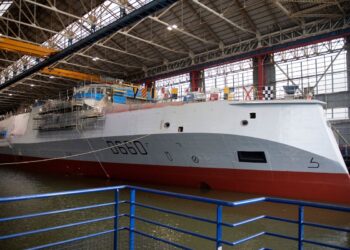
**Cancellation of the Constellation Frigate Program:**
On October 24, 2023, the US Navy announced the cancellation of its Constellation frigate program due to ongoing cost overruns and delays. The decision comes after months of challenges related to the program, which has faced significant setbacks in its development timelines and budget management. However, the Navy will retain two vessels already being constructed by Italian shipyard Fincantieri in Wisconsin.
**Statements by Navy Secretary:**
Navy Secretary John C. Phelan indicated that a “strategic shift” away from the Constellation-class frigate program is necessary to enhance operational efficiency. In a statement posted on X (formerly Twitter), he noted that four additional ships under contract but not yet constructed would be canceled. This decision is positioned as a move toward optimizing the Navy’s fleet capabilities.
**Concerns Regarding Design and Completion:**
The original design for the Constellation frigates was based on Fincantieri’s FREMM design, which is actively used by the French and Italian navies. By March 2023, the United States Government Accountability Office (GAO) revealed that design changes led to a dramatic slowdown, with only 70% of the program complete, extending the timeline by three years.
**Fincantieri’s Response and Future Orders:**
Fincantieri expressed expectations for future orders to compensate for the lost business from the canceled vessels. The company has invested over $800 million in its U.S. shipyards, employing approximately 3,750 staff across facilities in Marinette, Green Bay, Sturgeon Bay, and Jacksonville.
**Financial Implications:**
Sources in Italy estimated that the contracts for the six frigates were valued at around $6 billion. With the cancellation, ongoing work and indemnities with the U.S. government are projected to result in a financial outcome of approximately $3 billion, while potential new orders could account for an additional $2 billion.
**Political Reactions:**
The decision to halt the Constellation program received support from Senate Armed Services Committee Chairman, Senator Roger Wicker (R-Miss.), who praised the administrative changes within the Navy. He noted that while the program faced challenges, the future of shipbuilding remains a priority for Fincantieri and the U.S. Navy.
In closing, Secretary Phelan emphasized the critical need for the Navy to accelerate ship production to meet evolving threats, aligning this strategic reassessment with a goal to enhance the overall effectiveness of the fleet.