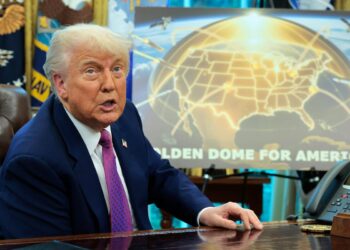
A Pentagon inspector general report confirmed that Defense Secretary Pete Hegseth transmitted sensitive operational information about an impending strike in Yemen via his personal cell phone. This action potentially jeopardized mission objectives and the safety of troops involved. The report, dated December 2 and publicly released on Thursday, revealed that Hegseth asserted the details shared in a March 15 Signal chat were either not classified or that he could safely declassify the information for an “unclassified summary” to share with chat participants.
Among those in the chat was Atlantic editor Jeffrey Goldberg, who, unbeknownst to Hegseth and other officials, later published a report exposing the security breach. The inspector general noted that, regardless of whether classified information was disclosed, Hegseth’s sharing of nonpublic information before the airstrike was fraught with risks. The chat included disclosures about the “quantity and strike times of manned U.S. aircraft over hostile territory” just hours before execution.
The report highlighted concerns regarding the use of personal devices for official business and the risks posed by using an unapproved network, stating that Hegseth’s choice could compromise sensitive Department of Defense (DoD) information, thus endangering personnel and mission objectives. The controversy resurfaced following Goldberg’s reports, which ignited discussions around the incident dubbed Signalgate. Some lawmakers called for Hegseth’s resignation, emphasizing the severe implications of his actions.
Rep. Sarah Elfreth, a Democrat from Maryland and member of the House Armed Services Committee, characterized Hegseth’s actions as a “rookie mistake” that could have endangered service members, and announced her intention to push for his immediate resignation.
In defense, the Pentagon referenced the IG’s assertion that Hegseth possessed the authority to declassify information. Timothy Parlatore, Hegseth’s attorney, stated that his client was exonerated in the report, emphasizing that no classified material was included in the texts and that Hegseth acted within his discretionary powers.
The IG observed that prior to the strike, then-U.S. Central Command commander Army Gen. Erik Kurilla sent four emails to Hegseth classified as “secret,” containing operational details about the planned strike. The emails lacked any markings suggesting they contained both classified and unclassified content.
On March 15, Hegseth was at his home, operating within a secure facility, when he shared precise timing details of the planned strike with a group chat that included Vice President JD Vance, former national security adviser Mike Waltz, and Goldberg, who was included mistakenly. Hegseth’s messages detailed when waves of F-18 Hornet fighters would launch and the timing of drone and missile strikes, echoing earlier classified information from Kurilla’s emails.
Former defense officials commented on the classified nature of such specifics, warning that had adversaries acquired the information, it could have endangered U.S. aircraft. Hegseth refused to meet with the IG but provided a written statement affirming that he believed the information did not require classification.
While the IG concluded that Hegseth had the authority for classification decisions, it criticized his use of Signal, a non-approved messaging application, to transmit sensitive operational information shortly before the air strikes, advising that using personal devices for such purposes does not align with departmental regulations. The report noted that while personal devices might be used for official communications under certain conditions, these exceptions were not applicable in this instance. The IG included context from a DoD lawyer in the report, although it indicated no documentation was provided to substantiate its claims.
Stephen Losey, the writer of this report, serves as the air warfare reporter for Defense News, having previously covered military leadership and operations.